
Design & AI
Why does design & AI matter?
AI can be integrated in different ways: in the background, as suggestions, on demand, in a conversational flow, or through a guided journey. The right format depends on your users, your business context, and how much autonomy you want to give the system. We design AI interfaces that keep that autonomy under control: onboarding, user controls, uncertainty handling, and the right explanations at the right time - including when the AI doesn’t know or gets it wrong.

Make AI actionable in the workflow
Without design, AI stays as a separate “corner” of the product: you get an answer, then you figure out the rest. By designing the right controls and actions - apply, edit, compare, validate - AI becomes a natural step in the journey.

Handle uncertainty without breaking the experience
AI can be confident, uncertain, or wrong. Good design anticipates these states and guides the user: ask for clarification, suggest alternatives, explain a limitation, or switch to a manual option. The result: fewer blockers and fewer workarounds.

Build trust through visible evidence
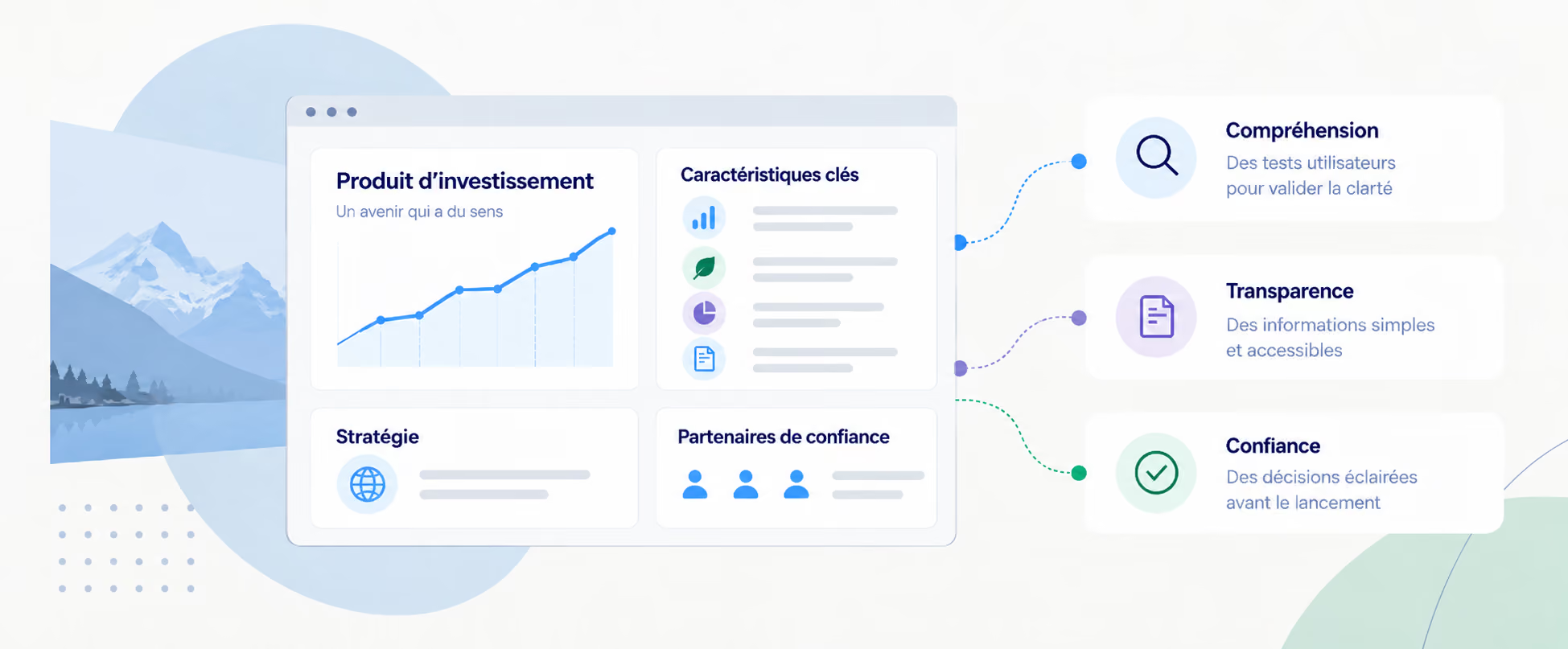
Trust isn’t declared - it’s built interaction by interaction. By integrating tangible elements, you enable users to verify and stay in control - especially in high-stakes contexts.
When should you focus on design & AI?


Ce que nous faisons concrètement
How we work with you
Here are the main steps of the engagement. They adapt to your context, constraints, and decisions to be made. We can start from AI Research deliverables - or directly if framing is already in place.
Together, we clarify the target journey: goals, tasks, high-value AI moments, and product and technical constraints. The idea is simple: define what needs to be designed - and what doesn’t.
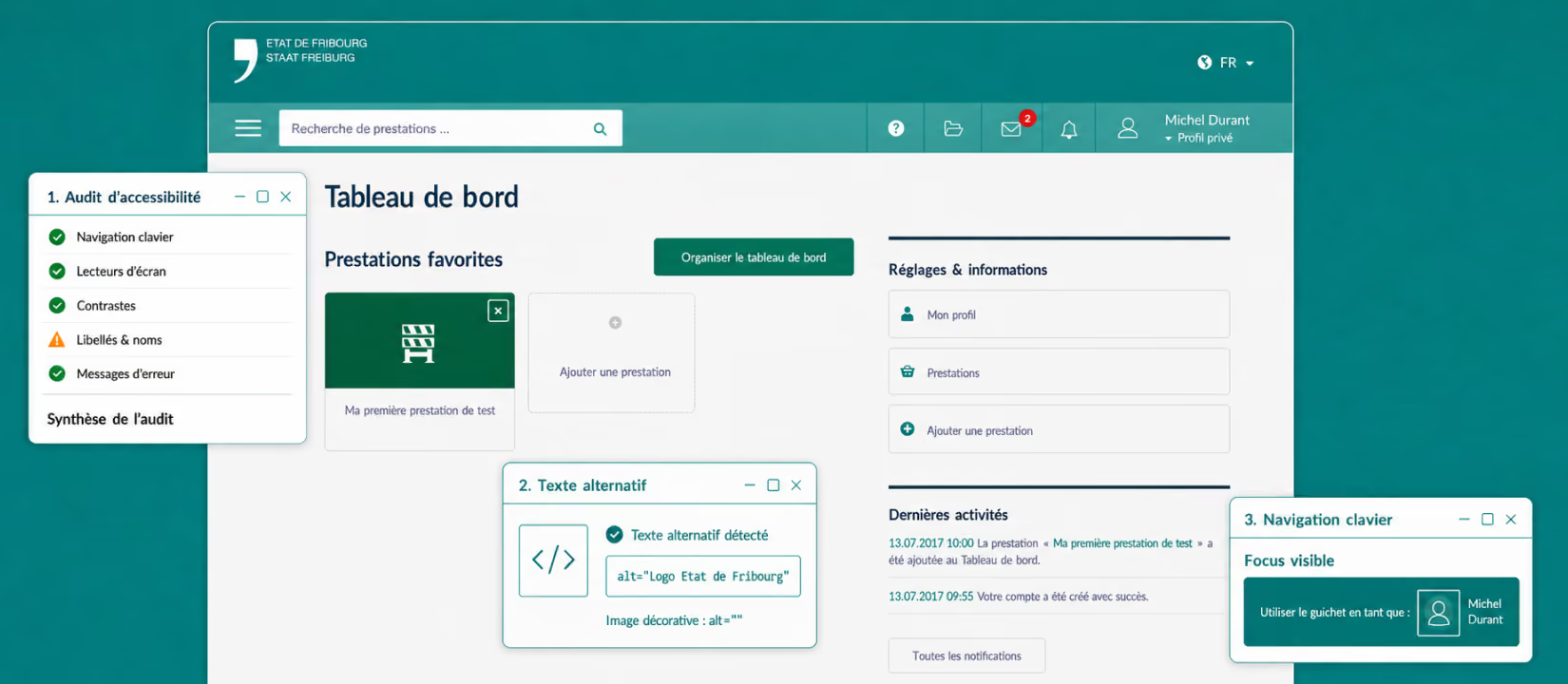
Next, we design the AI patterns: onboarding, user controls, uncertainty handling, explainability, edge cases, and error states. The goal is to create an experience that’s robust, consistent, and testable.
From there, we prototype and test: interactive prototypes challenged with realistic scenarios, including failure cases. This validates understanding, control, and next-step action before you build.
Finally, we stabilise for delivery: components, microcopy, consistency rules, and implementation guidance. You speed up release and lay the foundations for continuous improvement.

Discover our projects