

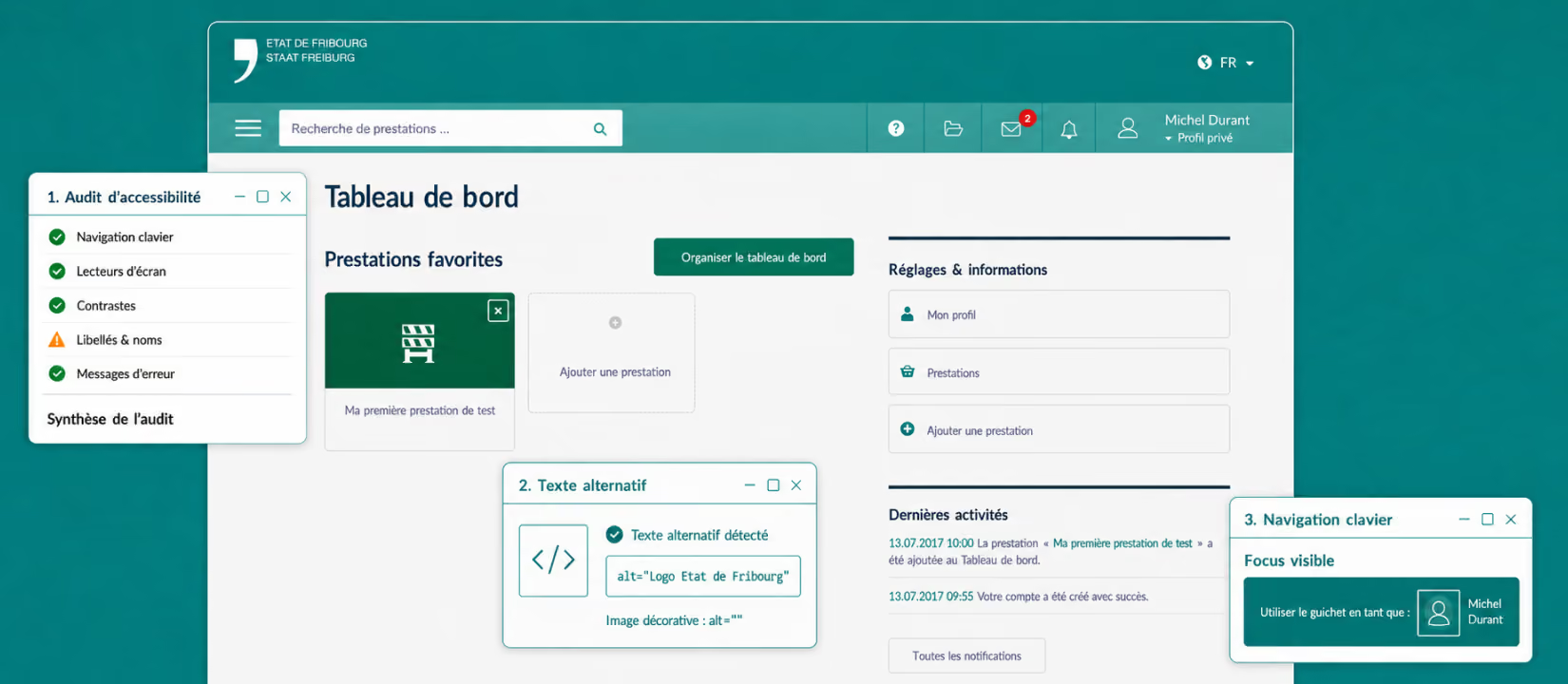
Making the State of Fribourg’s virtual counter accessible to everyone

Our Approach
A scope based on representative user journeys
The evaluation was based on a sample of 21 pages covering key situations: authenticated homepage, multi-step procedures and confirmation pages. The goal was to audit the critical moments - especially forms and interactions - where friction can cause users to abandon a process or block a person with a disability.
A robust and directly actionable framework
The audit was conducted according to RGAA 4.1, a 106-criteria framework based on the WCAG. This structure makes it possible to produce a clear, traceable diagnosis that can be transformed into a correction plan, criterion by criterion.
On a virtual counter, a seemingly technical detail can become a blocker, such as a form field without clear guidance.
Tests close to real usage conditions
The checks were carried out using analysis tools and assistive technologies, including NVDA and JAWS with Firefox, as well as control tools such as contrast checkers, HTML validators and dedicated browser extensions. The audit was conducted in collaboration with a specialised partner for the technical aspects, in order to ensure a robust and actionable analysis.
Barriers identified with a level of impact
The aim was not to produce an endless list, but to identify what prevents, slows down or discourages access to online procedures. For each non-compliant criterion, the deliverable presents a representative case, an explanation and a technical recommendation, with an impact level - blocking, major or minor - to guide the corrective action.
Deliverables designed for fast action
To make it easier to implement the corrections, the deliverable included an audit grid with results by page and the applicable criteria.
Correcting recurring patterns rather than isolated elements makes it possible to improve accessibility more effectively.
Key Benefits
A measurable and actionable diagnosis
26.98% RGAA 4.1 compliance across the audited scope, with 46 non-compliant criteria out of 63 applicable criteria across the sample.
Deliverables ready to support action
Detailed report, audit grid in the appendix, proposed prioritisation plan and presentation material to align product, technical and provider teams.
Calm, impact-oriented prioritisation
Clear arbitration criteria: impact and value for the people concerned, recurrence of the issues, then ease of implementation of the corrections.