
Building the Trianon design system to speed up design and deliver a consistent experience

Our Approach
Mapping needs and inconsistencies across services
We started with a UX audit of the platform, service by service. This helped us pinpoint UI variations, duplicated patterns, behavioural inconsistencies, and recurring friction points - issues that were hurting both user-facing consistency and delivery efficiency.
A shared foundation, built to evolve
Based on the audit, we defined the design system’s foundations: core components, usage rules, expected behaviours, and cross-service consistency principles. The goal was a base solid enough to harmonise what already existed, while staying flexible to support future needs across different services.
A design system can’t be reduced to a “UI library”. It’s a shared language that reduces interpretation gaps between design and development teams.
Co-building a component library with the dev team
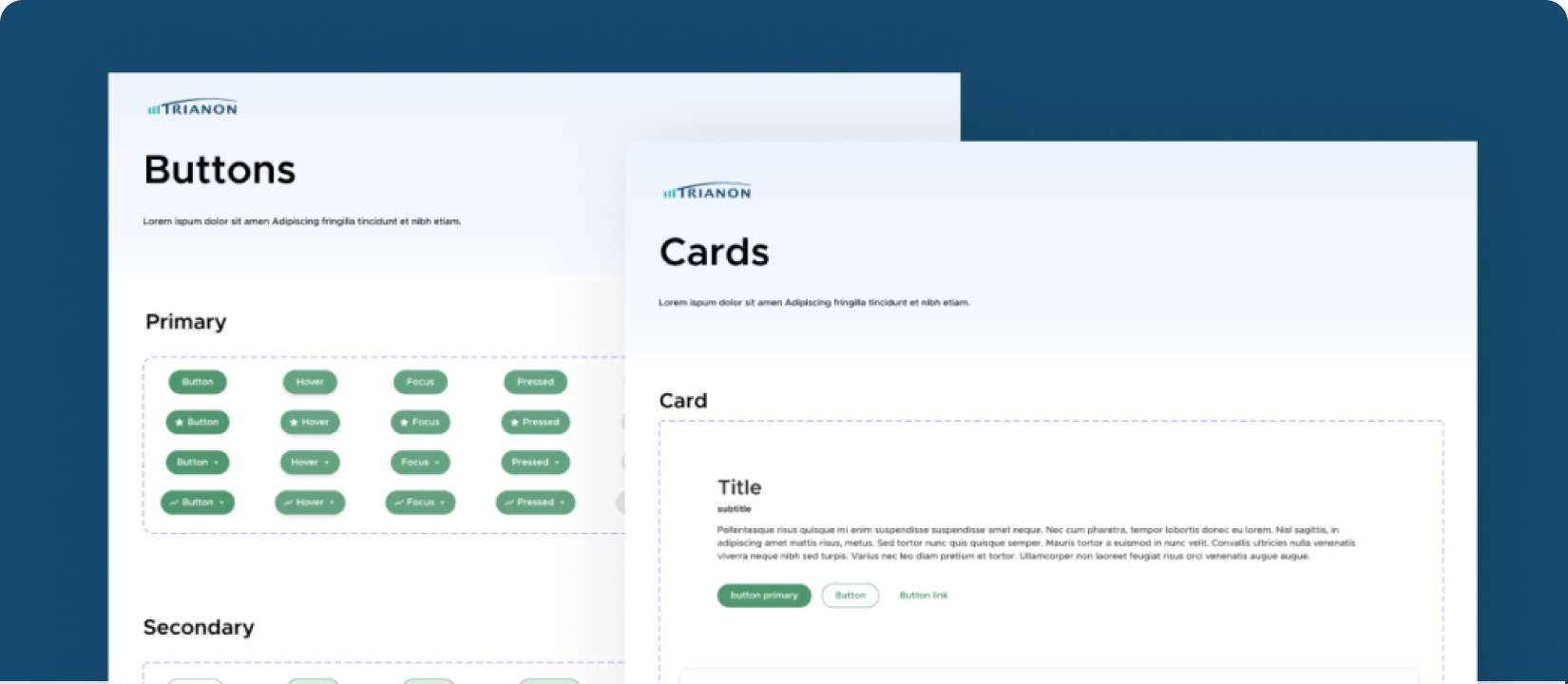
Next, we created a component library in close collaboration with the development team. This joint work ensured components were immediately usable, clarified composition rules, and kept the system grounded in real technical and business constraints.
Making it stick through team enablement
To ensure the system would last, we recommended training and supporting teams in adoption: how to use it day to day, how to contribute, and how to evolve components without breaking consistency. The aim was clear governance - so the design system empowers teams instead of becoming a static document.
A design system only creates value if it’s used. Adoption, governance, and contribution matter as much as the components.
Key Benefits
A design system teams can actually use
A complete, usable system adopted by development teams and product owners across services. Faster design, fewer back-and-forths, and simpler decisions.
Faster development, less duplication
Standardised components and rules reduce rework and speed up screen delivery. Less time rebuilding what already exists, more time improving journeys and product value.
A more consistent experience for end users
Visual and functional consistency improves clarity and trust across the platform. The experience becomes smoother and more predictable, whichever service people use.